 Skip to content
 July 9, 2026

When a yacht arrives in the European Union, a number of things can happen almost simultaneously.
The yacht may berth. Port formalities may be completed. The captain may provide documents to the local yacht agent. Immigration and crew requirements may be dealt with. The port authority may accept the vessel. Customs clearance always needs to be revised by a professional and in some form will need to be covered, depending on the yacht’s circumstances and the customs procedure that applies.
From the owner’s or captain’s perspective, it can therefore be very easy to hear a reassuring phrase such as:
“The yacht has been cleared or the yacht is cleared”
But what does that actually mean?
The word “cleared” is not specific enough when the subject is a non-Union yacht entering the EU.
A yacht can have its port and operational arrival formalities dealt with correctly by any yacht agent while its customs position requires separate attention. Equally, a customs procedure has the chance of being properly handled by a customs clearance professional while other arrival requirements are being managed by a yacht agent. This is the “seasoned” captains route.
The important question is not whether somebody says the yacht is cleared.
The important question is:
What was cleared, under which procedure, by whom, and what evidence is offered that confirms it?
Yacht owners and captains often work with a yacht agent who coordinates a wide range of arrival requirements. This is normal practise for some, particularly when entering an unfamiliar port.
Matters such as:
Port arrival and berthing
Maritime and port authority formalities
Immigration and crew formalities
Local operational requirements
Communications with port stakeholders
Provisioning and other practical arrangements
These are important parts of bringing a yacht into port, if you need help finding a Yacht Agent in Spain or in Europe, Gorian Customs Clearance only work with the most professional and elite agencies and we can help place you in contact and on track.
We can openly recommend yacht agent companies because customs clearance is a separate regulatory area and specialisation.
The European Commission describes a customs declaration as the legal act by which an operator indicates the intention to place goods under an EU customs procedure. A declaration is normally made by the owner or by a person acting on the owner’s behalf as a representative. In this case Gorian Aduanas.
For a yacht entering the EU from outside the customs territory, that distinction matters.
A port agent may be the person who tells the captain that the arrival has been “cleared”. That does NOT, by itself, tell the owner whether the yacht has been:
Those are customs questions.
For a high value yacht with its TAX exemption at stake, verbal reassurance should never be the only basis on which an owner or captain relies.
The owner should be able to establish what customs position the yacht has and what documentation supports it.
This does not necessarily mean carrying a large folder of paperwork around the yacht.
It means knowing that there is a “trail” of a documented customs position behind the arrival.
The European Commission’s 2026 Guidance Note for Pleasure Craft specifically explains that pleasure craft can be subject to different customs statuses and procedures, including Temporary Admission, and stresses that the underlying EU customs legislation of each country takes precedence over the guidance itself.
For a yacht owner, this leads to a simple practical principle:
If the yacht’s customs position is important, ask for its customs position — not simply because it has crossed into EU waters or confirmation that the yacht has “arrived”.
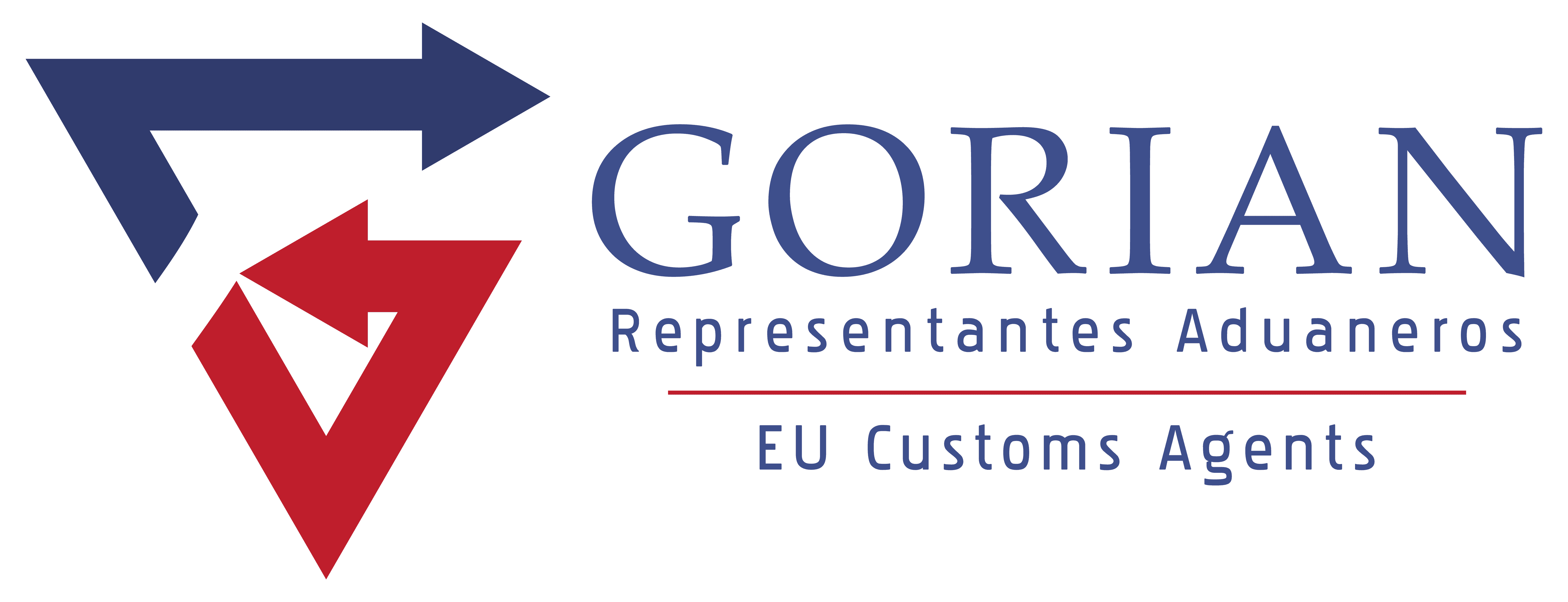
Before assuming that a yacht’s customs position has been dealt with, there are several straightforward questions worth asking.
This is the most important question.
If the yacht is an eligible non-Union vessel entering the EU for temporary private use, Temporary Admission may be relevant. But the applicable customs treatment depends on the facts and the conditions of the particular case.
The answer should therefore be specific.
Not:
“It has been cleared.”
But:
“The yacht has been placed under Temporary Admission.”
Or, where another procedure applies:
“The yacht has been placed under [relevant customs procedure].”
That difference in wording is significant, and should be noted.
A yacht agent may coordinate the overall arrival while a customs representative handles the customs declaration and representation.
Both roles, when they meet, should work together independently and when structured correctly work extremely well.
It is not recommended that they performed by the same company, as yacht agents generally do not employ qualified customs representatives.
Under the Union Customs Code, anyone may appoint a customs representative.
Spain’s Agencia Estatal de Administración Tributaria (AEAT) also maintains a Register of Authorised Customs Representatives and sets out the requirements for carrying out customs representation in Spain.
That makes the question particularly straightforward:
Who is responsible for the customs formalities of my yacht?
If the answer is a customs representative, the owner should know who that representative is, and have documentation supporting the fact.
If the answer is simply “the yacht agent handled everything”, it is reasonable to ask exactly what customs formalities were performed, and by who.
This is where a verbal “all done” becomes much less useful and more worrying.
Depending on the circumstances and procedure, there may be specific customs documentation or supporting evidence.
For Temporary Admission, for example, Annex 71-01 may be very relevant. The important point for the owner is not simply knowing the name of a form. It is being able to identify the actual customs procedure and supporting evidence applicable to the yacht, and call upon the customs clearance representative to assist if the need arises.
The European Commission’s pleasure-craft guidance confirms that non-Union pleasure craft intended for re-export can be placed under Temporary Admission and that the procedure must ultimately be discharged.
So rather than asking:
“Do we have the customs documents?”
ask:
“What evidence confirms the yacht’s current customs status and procedure?”
That is a much more useful question.
If the yacht is under Temporary Admission in the EU, the owner or captain should know when the procedure must be discharged.
For privately used sea and inland waterway transport, the normal discharge period is 18 months.
The European Commission’s current pleasure craft guidance states that Temporary Admission is time limited and that, when the period ends, the procedure must be discharged. Re-export is the usual way of discharging it, failing this some customs authorities can call upon the import TAX being liquidated.
That means the question should not simply be:
“Can we stay for 18 months?”
It should be:
“What is our Temporary Admission deadline, how will it be monitored and what is our current exit plan?”
That is a fundamentally different approach.
This is one of the easiest questions to overlook.
A customs procedure does not necessarily end simply because the yacht has arrived and begun cruising.
If Temporary Admission applies to a yacht, the procedure must eventually be closed correctly.
The European Commission explains that re-export is the usual method of closure and that failure to leave before the applicable period ends can result in customs duty and VAT becoming due.
Therefore, someone should be monitoring:
the date of entry;
the applicable customs procedure;
the conditions of that procedure;
the relevant deadline;
any customs-sensitive changes or circumstances;
and the eventual discharge and closure.
That responsibility should not be left to assumption.
For a small commercial shipment, a customs mistake made by a non qualified, non professional person may be inconvenient.
For a large yacht, with VAT / TAX exemption, the financial consequences can be considerably more significant.
Import duty and import VAT can represent substantial sums, depending on the yacht, its customs status, the applicable reliefs / exemptions and the circumstances of the importation.
The European Commission’s 2026 pleasure craft guidance confirms the general principle that goods brought into the EU customs territory can be subject to import duty and VAT, while certain customs procedures can alter when those liabilities arise.
That in mind, there is not better reason why the customs position should be established by a qualified and authorised customs representative before assumptions develop into problems.
It is not a good position to be in, and generally not a good sign when the yacht owner discovers months later that:
the wrong procedure was assumed;
nobody was monitoring a customs deadline;
the supporting documentation was incomplete;
the person who coordinated the port arrival was not the person responsible for customs;
the person responsible for the customs procedures was not trained, qualified, authorised or simply had no experience with yacht customs clearance;
or catastrophically, everyone involved thought somebody else was dealing with the customs position.
The golden rule of “EACH PROFESSIONAL, TO THEIR PROFESSION” and good coordination has never been more true and avoids that situation.
Gorian Yacht Customs Clearance only recommend and work with the most seasoned and elite yacht agents around Europe. This distinction is not intended to diminish the role of the yacht agent.
Quite the opposite.
A professional yacht agent can be a key part to a successful arrival and ongoing yacht operation, and this is evident when Gorian Aduanas is often contacted by yacht agents asking us to take command of the customs clearance formalities for their clients.
The point is simply that different professional specialities exist for different regulatory responsibilities. Knowing and remembering this is recognising the strengths in each professional and how they can benefit the yacht owner.
The yacht agent may coordinate the port, maritime and operational side of the arrival.
The customs specialist understand and secures the customs position.
Where appropriate, both should communicate directly and work together for the benefit of the client.
This is the principle behind:
One professional. One speciality.
The objective is not to create another layer of administration, especially as it may seem attractive that the yacht agent takes care of everything, quite the opposite;
It is to ensure that the right professional is dealing with the right tasks within his qualifications and experience, optimising the layers of protection offered to the yacht owner or captain.

This is particularly relevant when choosing who should handle the yacht’s customs clearance formalities in Spain.
Customs representation is not simply a marketing description.
Spain’s AEAT explains that customs representatives must meet applicable requirements, including the necessary professional capacity, and be registered in the Register of Customs Representatives.
The Union Customs Code also establishes the framework for customs representation and distinguishes between direct and indirect representation.
For a yacht owner, however, the customs representatives formal qualification and authorisation are only two parts of the decision.
Yacht specific customs experience is highly important, even more so when substantial amounts of suspended import VAT / TAX are in play.
Customs legislation applies to many different types of goods. A professional may be perfectly competent in general customs matters while having limited experience with the particular issues that arise around yachts, and knowing what the customs authorities look for, expect and want to see in a yacht declaration, Temporary Admission, ownership structures, VAT considerations, vessel movements and yacht operations.
For that reason, owners and captains should always demand to work with a customs clearance professional who understands both the customs authorities, procedures and the nautical world.
Customs law and the realities of yacht operations.
This is precisely the type of specialist support that Gorian Customs Clearance for yachts provides in Spain.

Before the yacht moves on to its next destination, the owner or captain should be able to answer a short list of questions.
What is the yacht’s current customs status?
Which customs procedure applies?
Has Temporary Admission been properly established / closed if applicable?
Who acted as the customs representative or otherwise handled the customs formalities?
What evidence confirms the customs position?
What is the applicable discharge deadline?
Who is monitoring that deadline?
What needs to happen when the yacht leaves the EU?
If those questions can be answered clearly, the owner has a much better understanding of the yacht’s customs situation.
If the answers are vague, or can not be answered, that is the point at which a qualified customs professional should be brought into the conversation ASAP and before any law or regulations are broken or taken so far as to threaten a yachts TAX / VAT position.

This is perhaps the most important scenario to consider.
If we imagine the captain arrives at a Mediterranean port.
The yacht agent has acted.
Documents are exchanged.
Port formalities are completed.
The crew is processed.
The yacht berths.
The captain is told: “All good! Everything is cleared.”
That may genuinely mean that everything the yacht agent was responsible for has been completed.
But before the yacht enters or leaves the port, the owner should still ask:
“And what has been done regarding customs?”
If the answer is:
“The customs procedure has been completed and here is the supporting evidence,”
the situation is clear.
If the answer is:
“ Your in EU waters” or “The yacht is in the port, so you’re fine,”
those are two very different answers.
The first describes a customs position.
The second describes an arrival.
We go one step further here by saying that all of our yacht agent partners , yacht owners and yacht captains who we deal with repeatedly state that “you should be talking to a yacht customs clearance professional BEFORE a yacht agent or any other professional”.
So that the customs clearance needs and formalities of the yacht can be studied, planned and executed all in time and BEFORE the yacht enters into EU water / territory.

We offer fully integrated customs clearance and VAT strategies for yachts of all sizes, from small recreational boats to yachts and large luxury vessels, we can provide import / export customs clearance, official customs paperwork, consignee solutions, temporary imports etc.
Our headquarters are located close to the Port of Málaga, a key point of entry for both Mediterranean and Atlantic-bound vessels. But our reach extends far beyond the Costa del Sol.
We operate across all of Spain and throughout the European Union, supported by a trusted network of international collaborators that allow us to deliver solutions wherever you need them seamlessly.
We adapt to each client’s needs and vessel type, crafting bespoke customs and VAT solutions that are as unique as your yacht.
Whether it’s a permanent import, temporary admission, or managing VAT Exemption for Charter Yachts and Recreational Boats or commercial charter fleets, we make the process seamless.
A yacht may not remain in the same port after its initial arrival, especially in the EU.
It may cruise from Spain to France, Italy or Greece all with different customs management needs. It may spend time in different marinas. It may leave and later return. Its operational itinerary can change considerably.
The customs position, however, does not simply disappear because the yacht has moved to another marina.
The European Commission’s pleasure craft guidance explains that a yacht under Temporary Admission is temporarily admitted into the EU customs territory rather than separately into each individual Member State.
That is why the customs position should be properly established at the BEGINNING BEFORE ENTRY INTO EU WATERS.
Once that is done, the owner or captain has a clear basis from which to manage the yacht’s movements and obligations.
A smooth arrival is exactly what every yacht owner wants, and is the main reason why they pay the services of a yacht agent to do so, and there is nothing wrong with an efficient yacht agent coordinating the port.
The problem arises only when the persona or company is not prepared to undertake or understand the yacht’s actual customs position.
A yacht can be:
berthed;
operationally cleared;
processed by the relevant port authorities;
and ready to cruise,
all while still requiring proper customs attention.
That is why yacht customs clearance should be treated as its own area of specialisation and professional responsibility.
The most effective approach is usually not to ask one person to do everything, especially when it requires specific qualifications, authorisation and experience.
It is to make sure each important area is handled by someone qualified to deal with it.
The Yacht Agent:
Port, maritime, operational and arrival requirements.Yacht Customs Clearance Specialist:
Customs procedure, Temporary Admission, customs documentation, import duty and import VAT position, compliance and discharge.Yacht Owner or captain:
Provides accurate information, understands the yacht’s position and ensures the relevant professionals are properly engaged and instructed.
When these roles communicate properly, the result is not duplication, It is a framework of coordinated compliance.
For a TAX exempted, high value yacht entering the EU, that distinction can be extremely valuable.
You do not need to be a customs specialist to ask the right question.
You simply need to ask:
“What exactly has my yahct been cleared for?”
If you have NOT engaged the services of Gorian, then ask:
“Which customs procedure applies to the yacht?”
And finally:
“Can you show me the evidence confirming that customs position?”
Those three questions can turn a vague assurance into a clearly understood position.
Most yachts owners and captains, especially high value yachts, have a specialised customs clearance representative in their arsenal, who offers that clarity from the beginning before ever getting close to EU territory.
Know who cleared what.
And the golden rule – “EACH PROFESSIONAL, TO THEIR PROFESSION”
No. Port and maritime formalities and customs formalities are separate areas of regulation and involve different authorities and professionals.
A yacht being accepted into port does NOT, by itself, establish the yacht’s customs status or the customs procedure under which it is operating.
Ask what exactly has been cleared. In particular, ask which customs procedure applies, who handled the customs formalities and what documentation or evidence confirms the yacht’s customs position.
Almost never. A yacht agent may coordinate port, maritime and operational matters WITHOUT being the person acting as the yacht’s customs representative.
If customs representation is required, it is highly recommended that the owner establish contact and engage the services of a qualified and authorised customs clearance representative with experience such as Gorian Aduanas.
Yes. The Spanish “Agencia Tributaria” maintains a Register of Authorised Customs Representatives and sets out requirements concerning the exercise of customs representation in Spain.
Yacht customs matters can involve Temporary Admission, customs status, import VAT considerations, vessel movements and discharge requirements.
A qualified professional with specific yacht customs experience is better placed to understand how these issues interact with the practical operation of a yacht.
The owner or captain are always responsible for monitoring the applicable customs period and ensuring that the procedure is properly discharged. Where professional customs clearance assistance has been appointed, all navigation plans and movements should be clearly agreed prior with the customs specialist.
Yes. When required, this is often the most practical approach. The yacht agent can coordinate port and operational requirements while the customs clearance specialist handles the customs position and related customs regimes.
Do not rely on the word “cleared” without understanding what it means behind it.
Ask what was cleared, which procedure applies, who handled it and what evidence confirms the yacht’s customs position.

Related Gorian Articles
Existing detailed guidance:
Importing Yachts and Vessels Using Annex 71-01 into Spain – Temporary Admission
Existing detailed guidance:
Temporary Admission for Non-EU Yachts in Spain – Annex 71-01 and VAT Compliance
Existing detailed guidance:
Customs Clearance Annex 71-01 for Yachts in Spain – Documentation, Compliance and Common Mistakes
Thank You for reading
Source: Gorian Aduanas
July 9, 2026
| Cookie | Duration | Description |
|---|---|---|
| cookielawinfo-checkbox-analytics | This cookie is set by GDPR Cookie Consent plugin. The cookie is used to store the user consent for the cookies in the category "Analytics". | |
| cookielawinfo-checkbox-functional | The cookie is set by GDPR cookie consent to record the user consent for the cookies in the category "Functional". | |
| cookielawinfo-checkbox-necessary | This cookie is set by GDPR Cookie Consent plugin. The cookies is used to store the user consent for the cookies in the category "Necessary". | |
| cookielawinfo-checkbox-others | This cookie is set by GDPR Cookie Consent plugin. The cookie is used to store the user consent for the cookies in the category "Other. | |
| cookielawinfo-checkbox-performance | This cookie is set by GDPR Cookie Consent plugin. The cookie is used to store the user consent for the cookies in the category "Performance". | |
| viewed_cookie_policy | The cookie is set by the GDPR Cookie Consent plugin and is used to store whether or not user has consented to the use of cookies. It does not store any personal data. |
Hablenos por WhatsApp!
Registered in – Malaga, Spain
Offices not open to the public.