
 Ir al contenido
 March 5, 2026
International shipping is built around predictable routes, reliable port schedules and stable maritime corridors. When one of those corridors becomes unstable, the ripple effects travel quickly through the global supply chain.
The current conflict involving Iran has placed intense pressure on maritime traffic in the Persian Gulf, particularly around the Strait of Hormuz. That narrow waterway connects Gulf ports such as Dubai and Abu Dhabi with the open ocean and the wider network of global shipping routes.
Around 20% of global oil trade moves through the Strait of Hormuz, along with large volumes of containerised cargo linking Asia, the Middle East and Europe. When security concerns increase in that region, shipping companies, insurers and freight operators react quickly.
Commercial vessels may delay departures, reroute journeys or wait offshore until safe passage is confirmed. Insurance providers can also raise war-risk premiums or restrict coverage for ships operating in conflict zones. The result is a slower, more uncertain supply chain.
For European importers working with suppliers in the United Arab Emirates, particularly those shipping cargo from Dubai or Abu Dhabi to Spain, the effects are already visible.
Transit times may change. Cargo may move through different ports. Freight rates can rise unexpectedly. These shifts make proper customs planning and documentation far more important than usual.
The Strait of Hormuz sits between Iran and Oman, forming the only maritime exit for vessels leaving the Persian Gulf. Despite being only about 33 km wide at its narrowest point, it carries enormous strategic importance.
Every day thousands of vessels transit this corridor. Oil tankers, container ships, vehicle carriers and specialised cargo vessels all rely on this passage to move goods between the Middle East and global markets.
Because there are very few alternative routes available, any disruption to this corridor immediately affects maritime traffic leaving Gulf ports.
Shipping operators monitor the situation constantly. When tensions rise, carriers may temporarily suspend routes, reduce vessel frequency or divert cargo to safer corridors until the situation stabilises.
For cargo leaving the UAE, this uncertainty creates additional logistical considerations for exporters and importers alike.


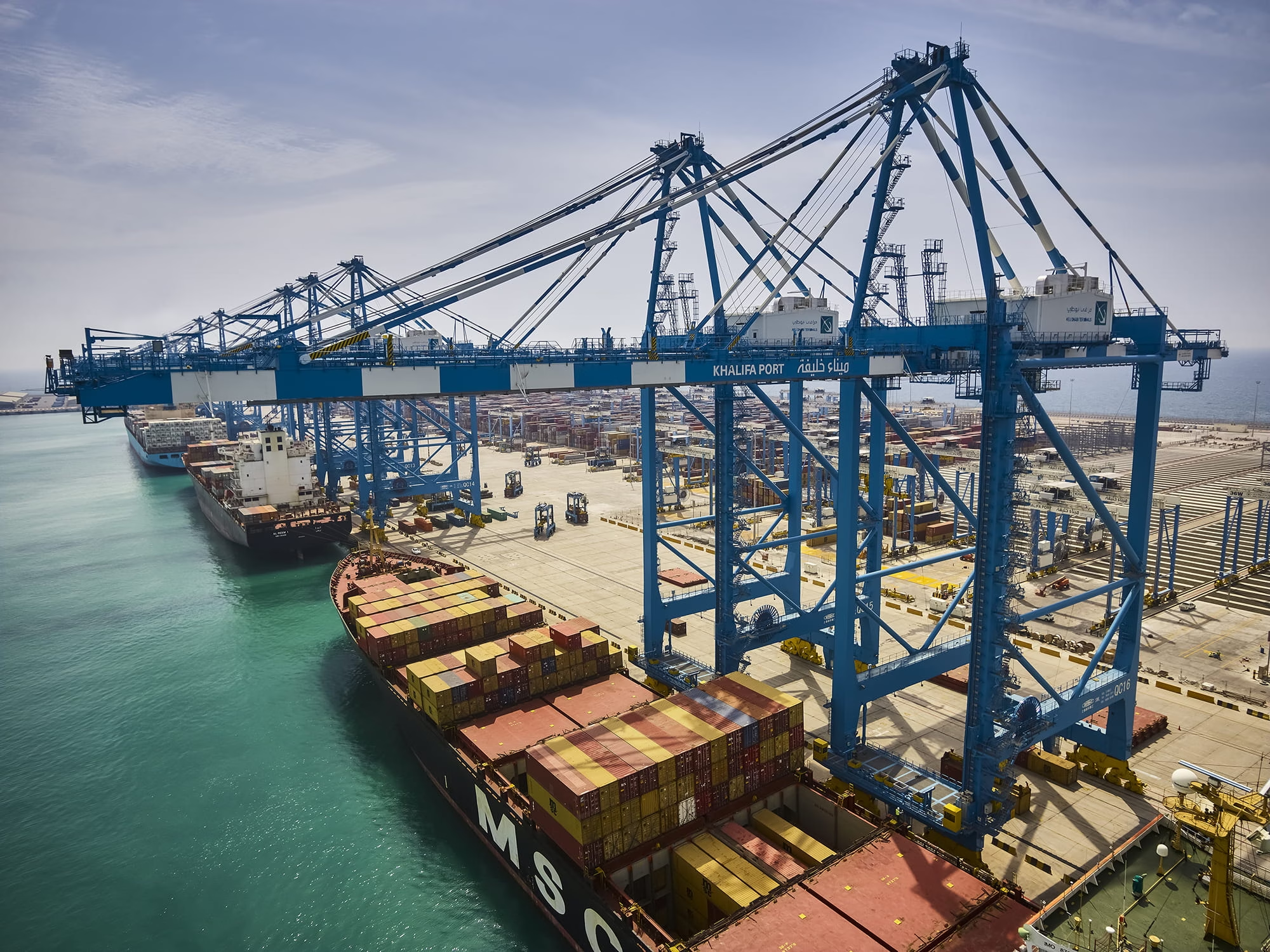
The United Arab Emirates has developed into one of the most important logistics hubs in the world. Ports such as Jebel Ali Port in Dubai and Khalifa Port in Abu Dhabi serve as major gateways linking Asian manufacturing, Middle Eastern trade and European markets.
Jebel Ali alone is one of the largest container ports globally and a central hub for vehicle exports, heavy equipment shipments and luxury goods distribution.
However, because these ports sit inside the Persian Gulf, vessels must pass through the Strait of Hormuz to reach international waters.
When maritime security concerns rise in the region, the immediate consequences often include:
delays to vessel departures
ships waiting offshore before entering the strait
changes to shipping routes
increased marine insurance costs
reduced vessel frequency on certain routes
Even short interruptions can affect global shipping schedules. Containers may miss transshipment windows. Vehicle carriers may postpone departures. Freight forwarders must adjust logistics planning.
For businesses importing goods into Spain from Dubai or Abu Dhabi, these disruptions require careful coordination with freight partners and customs professionals.
When shipping routes become unstable, companies importing cargo often face unexpected complications.
Cargo may arrive later than planned, enter the EU through a different port or require additional documentation checks.
In these circumstances, working with experienced customs brokers and customs agents in Spain reduces the risk of delays, compliance errors and unnecessary costs.
A knowledgeable customs partner ensures that the regulatory side of the importation process remains smooth even when the logistics environment becomes unpredictable.
For businesses importing cars from Dubai, yachts from the UAE, commercial goods or personal belongings into Spain, professional customs guidance can make the difference between a straightforward import process and a costly logistical problem.


Dubai has become one of the world’s largest export centres for vehicles. Luxury cars, classic cars, performance vehicles and specialised vehicles are regularly shipped from the UAE to Europe.
Many buyers choose to import cars to Spain from Dubai due to competitive pricing and the availability of vehicles that may be difficult to find within the European market.
Vehicle exports typically move through roll-on roll-off (Ro-Ro) vessels or container shipping. These specialised transport systems depend on reliable port schedules and secure maritime routes.
When shipping lanes become uncertain, vehicle carriers may delay departures or alter their schedules. For importers this can create complications with delivery timelines, customs documentation and port handling arrangements.
Working with experienced customs agents in Spain ensures that the importation process remains compliant even if shipping schedules change.

The UAE is also a significant marketplace for luxury yachts and recreational vessels. Buyers from Europe frequently purchase yachts in Dubai and arrange transport to Mediterranean marinas.
Spain has one of the largest recreational boating markets in Europe. Marinas across Barcelona, Valencia, Malaga, the Balearic Islands and the Canary Islands regularly receive imported vessels.
Transporting yachts from the UAE to Europe usually involves specialised yacht carriers or semi-submersible transport vessels designed specifically for large boats.
When shipping disruptions occur in the Persian Gulf, these vessels may alter their sailing schedules or adjust routes.
For owners importing yachts and boats into Spain, the most important element is ensuring that the customs clearance documentation is correctly prepared before arrival.
Delays at sea are inconvenient, but delays at customs can be far more costly.

International trade is governed by complex customs regulations. Import duties, VAT, product classifications and documentation requirements must all be handled correctly.
A professional Customs Broker manages the regulatory side of the importation process, ensuring that goods entering Spain comply with European Union customs legislation.
Authorised customs agents in Spain typically manage:
customs declarations
tariff classification codes
calculation of import duties and VAT
verification of invoices and shipping documentation
coordination with freight forwarders and port authorities
When shipping disruptions occur, this role becomes even more important. Changes to arrival ports, shipping schedules or cargo routing can all affect the customs process.
Experienced customs brokers ensure that documentation remains compliant regardless of how the shipment reaches Spain.
Spain is a major entry point into the European Union for international cargo. Several Spanish ports manage large volumes of imports arriving from the Middle East and Asia.
Key ports handling international cargo include:
Valencia
Barcelona
Algeciras
Bilbao
Malaga
During periods of global shipping disruption, cargo may sometimes arrive through alternative European ports before being transported onward to Spain.
In those situations, customs procedures must still comply with EU import regulations and Spanish tax requirements.
For businesses importing goods into Spain from Dubai or Abu Dhabi, careful preparation of documentation is essential.

Every shipment entering Spain from outside the European Union requires proper import documentation.
Typical documentation includes:
commercial invoice
bill of lading
packing list
certificate of origin
transport documentation
technical documentation for vehicles or vessels
Additional procedures apply to specific cargo types.
For example, when individuals move permanently to Spain, they may be able to import personal belongings under change of residence rules. Under certain conditions this allows personal goods to enter Spain with reduced tax liability.
Vehicles imported under relocation procedures must still meet Spanish registration and compliance requirements.
Preparing this documentation correctly from the start avoids delays when the cargo arrives at a Spanish port.
The situation in the Persian Gulf highlights broader trends affecting international shipping.
Several factors are shaping the current global logistics environment:
geopolitical tensions in key maritime corridors
rising insurance costs for vessels operating in high-risk regions
supply chain adjustments by shipping lines
increased monitoring of maritime security risks
Shipping companies continuously adjust their operations in response to these conditions. Routes may change, transit times may increase and freight costs can fluctuate.
For businesses trading internationally, adaptability has become essential.
Transit time varies depending on the shipping route and vessel schedule. Under normal conditions shipping from Dubai to a Mediterranean port typically takes several weeks. Delays may occur if shipping routes are affected by geopolitical events.
Vehicle imports normally require a commercial invoice, bill of lading, export documentation, identification documents for the importer and technical documentation needed for registration in Spain.
Yes. Yachts can be transported from Dubai to Spain using specialised yacht transport vessels, cargo ships… even containers! Upon arrival the vessel must complete EU customs clearance procedures before it can be registered or used in European waters.
Individuals relocating permanently to Spain may be able to import personal belongings under specific customs rules known as change of residence procedures. Eligibility conditions apply and documentation must be submitted correctly to Spanish customs authorities.


(The Spanish National Association of Nautical Companies)
At Gorian Customs Clearance Agents, we are proud to be the only customs agency established in Spain with a team specialising exclusively in the nautical sector.
This approach enables us to offer tailor-made solutions to challenging projects designed for yacht owners, vessel managers and companies in the sector who need to navigate safely through complex customs and tax regulations.
Our work is further strengthened by our associate membership of ANEN (National Association of Nautical Companies), the leading organisation in Spain that brings together the main players in the nautical world. This alliance positions us as a strategic partner for the sector, ready to act at the intersection of maritime and customs regulations, offering rigorous, up-to-date and accessible support.
Whether importing a yacht, processing a VAT or registration tax exemption, or advising on European charter processes, our team is committed to ensuring that every transaction runs smoothly and as efficiently as possible.
Our active participation in ANEN reinforces this commitment, keeping us up to date with regulatory changes and opportunities in the nautical market, both nationally and across Europe.

Our Customs Agency specialises in offering comprehensive nautical solutions for yachts and recreational boats.
Some of our solutions include:
We provide advice and comprehensive management for the permanent and temporary importation of yachts and recreational boats, ensuring compliance with all customs and tax regulations. Our team takes care of all the necessary paperwork to facilitate the entry or exit of your boat into or out of the European Union. gorian.es
We offer specialised services in the Inward Processing Regime, allowing non-EU vessels to undergo maintenance, repair or reconditioning work in Spain without incurring additional VAT costs. Our team ensures proper management in accordance with current regulations, optimising the benefits of this regime for our clients.
We advise on customs and tax management for companies and individuals who wish to offer chartering services with their yachts or recreational boats, ensuring compliance with all legal obligations and facilitating commercial operations in Spanish territory.
Since 2012, our experience in the nautical and customs sector has enabled us to offer professional solutions tailored to the specific needs of each client.
‘At Gorian Customs Agents in Malaga, we are proud to be the only customs company with a qualified inspector authorised by the authorities to inspect yachts and recreational boats in Europe and a naval expert who is part of the company’s management team.’
Contact us for a personalised consultation and find out how we can help you with the customs management of your boat.
Source: Gorian Customs Clearance
March 5, 2026
The content on this blog and in all its published articles is provided for informational and educational purposes only; it is not intended as, and does not constitute, legal, financial, medical, or any other professional advice. While we strive for the accuracy and timeliness of the information presented, we do not guarantee its completeness, accuracy, or currency, and we assume no liability for any errors, omissions, or misinterpretations, thus your reliance on any information from this website is strictly at your own risk. We shall not be liable for any damages or losses arising from your use of, or inability to use, the information on this website. The opinions and views expressed are solely those of the author(s) and do not necessarily reflect the views of any organization, company, or entity with which the author(s) may be affiliated. By using this website, you agree to these terms and acknowledge that the author(s) and owners of this blog bear no responsibility or legal liability for the use of the information provided herein.
| Cookie | Duración | Descripción |
|---|---|---|
| cookielawinfo-checkbox-analytics | 11 months | This cookie is set by GDPR Cookie Consent plugin. The cookie is used to store the user consent for the cookies in the category "Analytics". |
| cookielawinfo-checkbox-functional | 11 months | The cookie is set by GDPR cookie consent to record the user consent for the cookies in the category "Functional". |
| cookielawinfo-checkbox-necessary | 11 months | This cookie is set by GDPR Cookie Consent plugin. The cookies is used to store the user consent for the cookies in the category "Necessary". |
| cookielawinfo-checkbox-others | 11 months | This cookie is set by GDPR Cookie Consent plugin. The cookie is used to store the user consent for the cookies in the category "Other. |
| cookielawinfo-checkbox-performance | 11 months | This cookie is set by GDPR Cookie Consent plugin. The cookie is used to store the user consent for the cookies in the category "Performance". |
| viewed_cookie_policy | 11 months | The cookie is set by the GDPR Cookie Consent plugin and is used to store whether or not user has consented to the use of cookies. It does not store any personal data. |
Hablenos por WhatsApp!
Registrado en- Málaga, España (Spain)
Oficinas no abiertas al publico.
Registrado en- Málaga, España (Spain)
Oficinas no abiertas al publico.